
Carbon Nanospheres Analysis
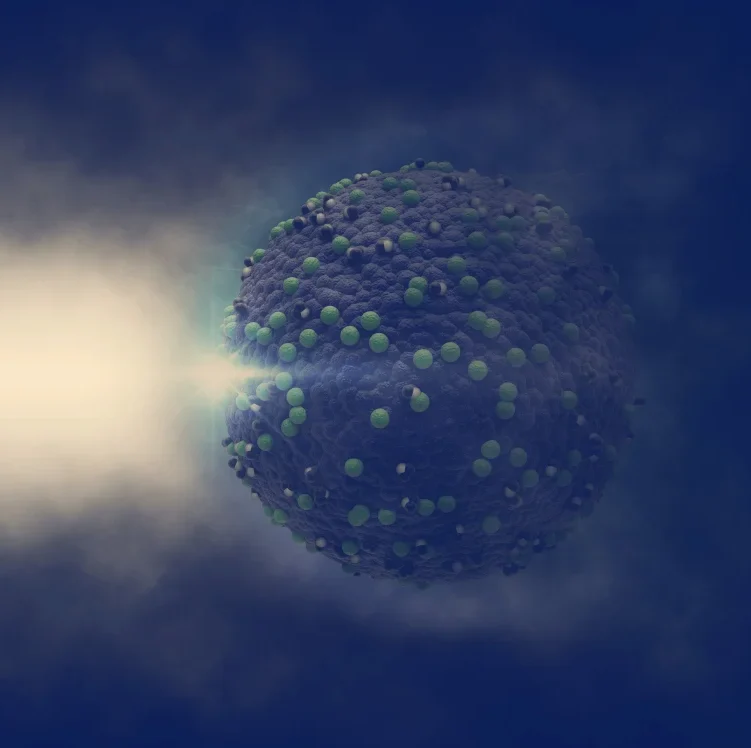
Carbon nanospheres represent a versatile class of spherical carbon-based nanomaterials known for their uniform morphology, high surface area, tunable porosity, and chemical stability. These nanoparticles typically range from a few nanometers to several hundred nanometers in diameter and are widely applied in energy storage, catalysis, adsorption, drug delivery, coatings, and advanced composite systems. Their spherical geometry provides distinct advantages in packing behavior, dispersion uniformity, and surface functionalization. However, performance in practical applications is strongly influenced by particle size distribution, surface chemistry, and aggregation state. As a result, precise carbon nanospheres analysis is essential to ensure consistent functionality and manufacturing reliability.
As demand increases across industrial and research sectors, accurate carbon nanospheres characterization becomes critical. Even minor variations in particle size or aggregation behavior can significantly impact electrochemical performance, adsorption efficiency, mechanical reinforcement, and dispersion stability.
NTA for carbon nanospheres provides particle-level insights into size distribution, concentration, and aggregation behavior directly in liquid suspensions, supporting advanced material development and process control.
Fundamentals of Carbon Nanospheres
Carbon nanospheres are spherical carbon particles produced through controlled synthesis techniques. Depending on synthesis parameters, they may exhibit solid, porous, or hollow structures.
Common synthesis methods include:
- Hydrothermal carbonization
- Chemical vapor deposition (CVD)
- Pyrolysis of polymer precursors
- Sol–gel processes
- Template-assisted synthesis
The resulting carbon nanospheres exhibit properties influenced by:
- Particle diameter and uniformity
- Surface functional groups
- Degree of graphitization
- Porosity and internal structure
- Interparticle interactions
These characteristics directly affect dispersion behavior, catalytic activity, and stability under operational conditions.
Types of Carbon Nanosphere Systems
Carbon nanospheres are utilized in various forms and applications, including:
- Colloidal dispersions in aqueous or organic media
- Electrode materials for batteries and supercapacitors
- Catalyst supports
- Adsorbent systems for environmental remediation
- Polymer nanocomposites
Across all systems, reliable carbon nanospheres characterization is essential for ensuring consistent particle populations and dispersion quality.
Importance of Carbon Nanospheres Analysis
Although spherical geometry improves packing uniformity, carbon nanospheres can still form aggregates due to surface energy and interparticle forces. Uncontrolled aggregation may lead to:
- Reduced electrochemical efficiency
- Poor dispersion stability
- Inconsistent adsorption performance
- Sedimentation in liquid formulations
- Variability in composite reinforcement
Key drivers for precise carbon nanospheres analysis include:
- Monitoring particle size distribution
- Detecting aggregation behavior
- Ensuring batch-to-batch consistency
- Supporting scale-up and manufacturing control
- Optimizing synthesis parameters
Traditional ensemble-based characterization methods may not fully represent heterogeneous or multimodal particle populations, particularly in complex dispersions.
NTA for Carbon Nanospheres
Nanoparticle Tracking Analysis is a single-particle technique that measures particle size and concentration by tracking Brownian motion in liquid suspension. When carbon nanospheres are illuminated by a laser beam, scattered light from each particle is captured by a sensitive camera. Analysis of particle trajectories allows calculation of diffusion coefficients and hydrodynamic diameters, enabling accurate assessment of size distribution and concentration.
NTA for carbon nanospheres enables direct observation of individual particles and aggregates in their native liquid environment, providing realistic and reliable data for formulation and research applications.
Advantages of NTA for Carbon Nanospheres Characterization
- Particle-resolved measurement: Individual carbon nanospheres and aggregates are measured separately, avoiding ensemble averaging bias.
- Number-based size distributions: Accurate representation of particle populations in polydisperse systems.
- Absolute particle concentration measurement: Supports quality assurance and manufacturing consistency.
- Aggregation monitoring: Sensitive detection of aggregation during synthesis, storage, or processing.
- Native liquid-state analysis: Measurements performed directly in dispersion reduce preparation artifacts.
Carbon Nanospheres Measurement Workflow Using NTA
Carbon nanospheres characterization using NTA typically follows a structured workflow:
- Controlled dilution of the nanosphere dispersion to an optimal concentration range
- Introduction of the sample into a temperature-controlled measurement chamber
- Laser illumination and visualization of individual particles
- Tracking of Brownian motion and trajectory analysis
- Data processing to extract size distribution and concentration metrics
This workflow enables reproducible and standardized carbon nanospheres analysis across laboratory and industrial environments.
Key Parameters in Carbon Nanospheres Analysis
- Hydrodynamic Diameter: Reflects effective particle size in liquid media, including surface functionalization effects.
- Size Distribution: Number-based distributions reveal polydispersity and aggregation states.
- Particle Concentration: Supports formulation optimization and process control.
- Aggregation and Stability Behavior: Time-dependent monitoring identifies early-stage instability or sedimentation risks.
Comparison with Other Carbon Nanospheres Characterization Techniques
- Dynamic Light Scattering (DLS): Provides rapid ensemble measurements but may be biased toward larger aggregates in polydisperse samples.
- Electron Microscopy: Offers detailed structural imaging but requires drying and preparation that may alter dispersion behavior.
- Complementary Role of NTA: NTA for carbon nanospheres bridges these approaches by combining particle-level resolution with liquid-state measurement, making it highly valuable for real-world dispersion analysis.
Role of NTA in Carbon Nanospheres Research and Development
- Synthesis optimization: Supports tuning reaction conditions to achieve desired size distributions.
- Formulation development: Evaluates dispersants and surface modifications to enhance stability.
- Process monitoring: Ensures uniform particle populations during scale-up.
- Stability studies: Long-term tracking reveals aggregation trends and formulation robustness.
Quality Control and Manufacturing Applications
In industrial environments, accurate carbon nanospheres characterization is essential for maintaining product quality. NTA supports:
- Batch release testing
- Specification compliance
- Monitoring aggregation during storage
- Root cause analysis of variability
- Continuous process improvement
Direct measurement of size distribution and concentration enhances confidence in energy storage, catalysis, adsorption, and composite applications.
Advanced NTA Capabilities for Carbon Nanospheres
Modern NTA platforms incorporate advanced optics, automated workflows, and enhanced data processing to improve sensitivity and reproducibility.
Advanced capabilities include:
- Improved detection of smaller carbon nanospheres
- Enhanced discrimination between primary particles and aggregates
- Reduced operator variability
- Robust analysis of complex multi-component dispersions
As carbon-based nanomaterials continue to expand across high-performance applications, NTA for carbon nanospheres plays a critical role in enabling precise carbon nanospheres analysis and comprehensive carbon nanospheres characterization, supporting innovation, scalability, and consistent material performance.
Get Accurate Nanoparticle Analysis for Your Materials
Discover how advanced Nanoparticle Tracking Analysis can support accurate measurement of particle size, concentration and dispersion behavior for your research and industrial applications.