
Zinc Oxide Nanoparticles Analysis
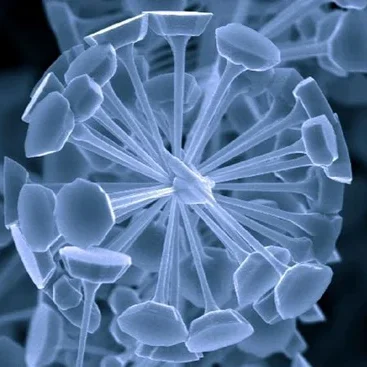
Zinc oxide nanoparticles, commonly referred to as ZnO nanoparticles, represent a versatile class of metal oxide nanomaterials with broad relevance across materials science, electronics, optoelectronics, catalysis, energy systems, biomedical engineering, cosmetics, and environmental technologies. These nanoparticles typically exhibit particle sizes ranging from a few nanometers to several hundred nanometers and possess unique physicochemical properties arising from their wide bandgap, high surface area, and tunable surface chemistry.
Zinc oxide nanoparticles serve as essential components in numerous industrial and research applications, including UV-blocking materials, sensors, catalysts, antimicrobial coatings, transparent conductive films, nanocomposites, and drug delivery systems. As application requirements become increasingly performance-driven, the need for precise and reliable characterization of zinc oxide nanomaterials has grown substantially. Even minor variations in particle size distribution, morphology, surface chemistry, or aggregation state can significantly influence optical, electronic, catalytic, and biological performance.
Nanoparticle Tracking Analysis (NTA) has emerged as a powerful analytical technique for zinc oxide nanoparticles, providing particle-level insights that complement conventional ensemble-based characterization methods. By enabling direct measurement of individual particles in suspension, NTA supports a deeper understanding of ZnO nanoparticle behavior across research, development, and manufacturing environments.
Fundamentals of Zinc Oxide Nanoparticles
Zinc oxide nanoparticles are crystalline metal oxide nanostructures typically exhibiting hexagonal wurtzite crystal structures. These particles can be synthesized with controlled size, shape, crystallinity, and surface functionality to meet specific application requirements. ZnO nanoparticles may appear as spherical particles, rods, plates, or hierarchical structures depending on synthesis conditions.
Common synthesis methods include:
- Sol–gel synthesis
- Hydrothermal and solvothermal methods
- Chemical precipitation
- Vapor-phase deposition
- Green synthesis using biological or plant-based extracts
The resulting ZnO nanoparticle systems exhibit properties strongly influenced by particle size, morphology, crystal defects, surface states, and interparticle interactions. These factors govern dispersion stability, aggregation behavior, and responses to environmental conditions such as pH, ionic strength, and temperature.
Types of Zinc Oxide Nanoparticles and Dispersions
Zinc oxide nanoparticles encompass a wide range of material systems, including:
Colloidal ZnO Nanoparticles
Colloidal dispersions of zinc oxide nanoparticles in aqueous or organic media are widely used in coatings, cosmetics, inks, and functional fluids.
Doped ZnO Nanoparticles
Doping ZnO nanoparticles with metals or non-metals modifies electronic and optical properties, enabling tailored performance in sensors, optoelectronic devices, and catalytic systems.
Surface-Functionalized ZnO Nanoparticles
Surface modification with polymers, ligands, or biomolecules enhances compatibility with matrices and biological environments, expanding the applicability of ZnO nanomaterials.
Composite and Hybrid ZnO Nanoparticles
These systems integrate zinc oxide nanoparticles with polymers, metals, or other inorganic materials, creating multifunctional nanocomposites with enhanced mechanical, optical, or antimicrobial properties.
Across all ZnO nanoparticle systems, accurate measurement of particle size, size distribution, and concentration is essential for understanding structure–property relationships.
Importance of Zinc Oxide Nanoparticles Characterization
Zinc oxide nanoparticles are highly sensitive to variations in synthesis conditions, surface chemistry, and dispersion environments. Changes in particle populations can significantly impact material performance and process outcomes. Key drivers for precise characterization include:
- Ensuring batch-to-batch consistency
- Monitoring dispersion stability and aggregation behavior
- Detecting subtle changes in particle size and morphology
- Optimizing synthesis and formulation parameters
- Supporting scale-up and manufacturing control
Conventional characterization techniques often provide averaged results that may not fully capture heterogeneity within ZnO nanoparticle populations. This limitation becomes increasingly critical as zinc oxide nanomaterials become more complex and application-specific.
Nanoparticle Tracking Analysis for Zinc Oxide Nanoparticles
Nanoparticle Tracking Analysis is a single-particle measurement technique that determines particle size and concentration by tracking the Brownian motion of individual particles suspended in a liquid. When zinc oxide nanoparticles are illuminated by a laser beam, each particle scatters light that is detected by a sensitive camera. By analyzing particle trajectories, diffusion coefficients are calculated and converted into hydrodynamic diameters.
For ZnO nanoparticle dispersions, this approach enables direct observation of particle populations under native conditions, without reliance on ensemble averaging.
Advantages of NTA for Zinc Oxide Nanoparticles
- Particle-resolved measurement: NTA measures individual zinc oxide nanoparticles rather than averaged populations, enabling detection of minor particle fractions, aggregates, and secondary size modes.
- Number-based size distributions: NTA produces number-weighted distributions that provide a realistic representation of particle populations in polydisperse systems.
- Particle concentration determination: Absolute particle concentration measurements support process control, quality assurance, and comparative studies across synthesis batches or formulation conditions.
- Native liquid-state analysis: Measurements are performed directly in dispersion, preserving the physical state of ZnO nanoparticles and minimizing artifacts associated with drying or immobilization.
Zinc Oxide Nanoparticles Measurement Workflow Using NTA
Zinc oxide nanoparticle characterization using NTA typically follows a structured workflow:
- Controlled dilution of the ZnO nanoparticle dispersion to an optimal particle concentration
- Introduction of the sample into a temperature-controlled measurement chamber
- Optical detection and tracking of individual zinc oxide nanoparticles
- Data processing to extract particle size, size distribution, and concentration metrics
This workflow supports reproducible analysis across a wide range of ZnO nanoparticle systems.
Key Parameters in Zinc Oxide Nanoparticles Characterization
- Particle Size: Hydrodynamic diameter reflects interactions between zinc oxide nanoparticles and the surrounding medium, including surface chemistry, functional coatings, and solvent effects.
- Size Distribution: Number-based distributions reveal polydispersity, aggregation, and distribution broadening that may influence material performance and application outcomes.
- Particle Concentration: Particle concentration is critical for process monitoring, formulation optimization, and performance evaluation in industrial and research applications.
- Aggregation and Stability Behavior: Changes in measured size and concentration over time provide insights into dispersion stability, surface interactions, and environmental sensitivity of ZnO nanoparticle systems.
Comparison with Other ZnO Nanoparticles Characterization Techniques
- Dynamic Light Scattering (DLS): DLS provides rapid ensemble measurements but is highly sensitive to larger particles and aggregates. In polydisperse ZnO nanoparticle dispersions, results may be biased toward larger size fractions.
- Electron Microscopy: Electron microscopy offers high-resolution imaging but requires extensive sample preparation and drying, limiting its relevance for liquid-phase ZnO nanoparticle systems.
- Complementary Role of NTA: NTA bridges these approaches by combining particle-level resolution with liquid-state measurement, making it particularly valuable for routine characterization of zinc oxide nanoparticles.
Role of NTA in Zinc Oxide Nanoparticles Research and Development
- Synthesis optimization: NTA supports fine-tuning of synthesis parameters to achieve targeted particle sizes and distributions.
- Formulation development: NTA enables evaluation of dispersion stability and surface functionalization strategies.
- Process optimization: During scale-up, NTA facilitates monitoring of particle size consistency and concentration control.
- Stability studies: Long-term monitoring of ZnO nanoparticle dispersions reveals early signs of aggregation, sedimentation, or destabilization.
Quality Control and Manufacturing Applications
In industrial and manufacturing environments, zinc oxide nanoparticle characterization plays a critical role in quality assurance. NTA supports:
- Batch release testing
- Specification compliance
- Root cause analysis for production variability
- Continuous process improvement
By providing direct particle concentration and size distribution data, NTA strengthens confidence in the consistency and performance of zinc oxide nanomaterial products.
Advanced NTA Capabilities for Zinc Oxide Nanoparticles
Modern NTA platforms integrate enhanced optics, automated workflows, and advanced data processing to improve sensitivity and reproducibility. These capabilities are particularly valuable for ZnO nanoparticle dispersions, where small variations can lead to significant performance differences.
Advanced capabilities include:
- Improved detection of smaller zinc oxide nanoparticles
- Reduced operator-to-operator variability
- Robust analysis of complex, multi-component dispersions
Get Accurate Nanoparticle Analysis for Your Materials
Discover how advanced Nanoparticle Tracking Analysis can support accurate measurement of particle size, concentration and dispersion behavior for your research and industrial applications.