
Fungal infections remain a significant global health concern, particularly with the increasing prevalence of drug-resistant strains. Conventional antifungal therapies often face limitations such as poor bioavailability, toxicity, and reduced effectiveness against resistant pathogens. In response, nanotechnology has emerged as a promising solution, with silver nanoparticles drug delivery systems gaining considerable attention for their enhanced antimicrobial properties.
At the same time, advanced analytical techniques are playing a crucial role in understanding how these systems function. Among them, SERS spectroscopy applications have become particularly valuable for studying nanoparticle–drug interactions at a molecular level. Together, these developments are shaping the future of antifungal nanoparticle therapy.
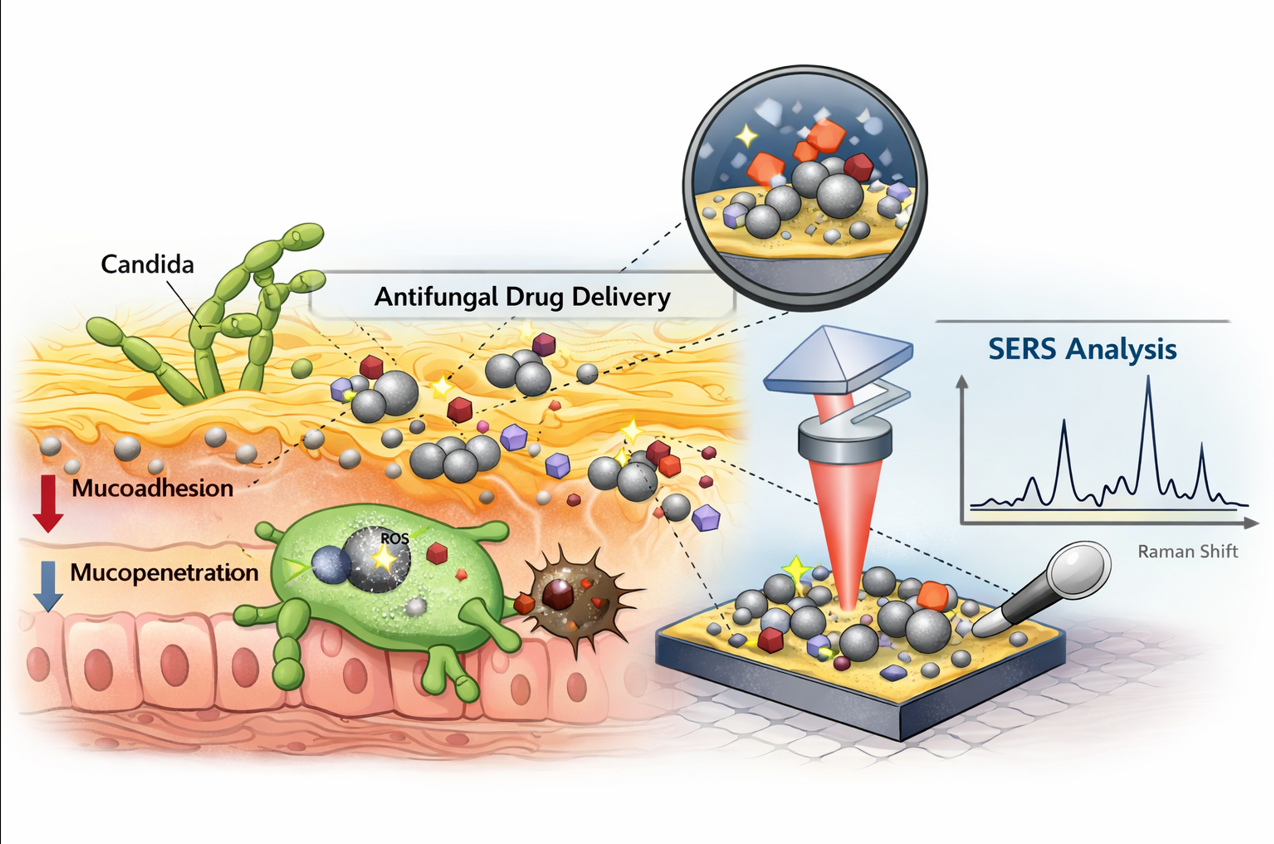
Fungal infections remain a significant global health concern, particularly with the increasing prevalence of drug-resistant strains. Conventional antifungal therapies often face limitations such as poor bioavailability, toxicity, and reduced effectiveness against resistant pathogens. In response, nanotechnology has emerged as a promising solution, with silver nanoparticles drug delivery systems gaining considerable attention for their enhanced antimicrobial properties.
At the same time, advanced analytical techniques are playing a crucial role in understanding how these systems function. Among them, SERS spectroscopy applications have become particularly valuable for studying nanoparticle–drug interactions at a molecular level. Together, these developments are shaping the future of antifungal nanoparticle therapy.
The Growing Need for Advanced Antifungal Solutions
Fungal infections, especially those caused by species like Candida albicans, can be difficult to treat and may lead to severe complications in immunocompromised individuals. While antifungal drugs such as echinocandins have improved treatment outcomes, challenges remain in delivering these drugs effectively to the target site.
Traditional drug delivery methods often result in:
- Limited penetration into infected tissues
- Rapid drug degradation or clearance
- Systemic side effects
These limitations highlight the need for more efficient delivery systems, which is where nanotechnology offers significant advantages.
Role of Silver Nanoparticles in Drug Delivery
Silver nanoparticles have been widely studied for their unique physicochemical properties. Their high surface area, tunable size, and reactive surface chemistry make them ideal candidates for drug delivery applications.
In the context of silver nanoparticles drug delivery, these particles can act as carriers that improve the stability and effectiveness of antifungal agents. They also exhibit inherent antimicrobial activity, which can enhance the overall therapeutic effect.
Key advantages include:
- Enhanced drug loading capacity
- Improved penetration into microbial cells
- Controlled and sustained drug release
- Synergistic antimicrobial effects
Silver nanoparticles can interact with fungal cell membranes, disrupt cellular functions, and generate reactive oxygen species, contributing to their antifungal activity. When combined with conventional antifungal drugs, they can significantly improve treatment performance.
Understanding Antifungal Nanoparticle Therapy
The concept of antifungal nanoparticle therapy involves using nanoscale materials to deliver antifungal agents more efficiently. This approach aims to overcome the limitations of traditional therapies by enhancing drug delivery and targeting.
Nanoparticle-based systems can be engineered to:
- Increase drug solubility
- Improve bioavailability
- Target specific infection sites
- Reduce toxicity to healthy tissues
In antifungal applications, nanoparticles can be designed to interact with microbial cells in a way that enhances drug uptake and effectiveness. This targeted approach is particularly valuable in treating resistant infections, where conventional drugs alone may not be sufficient.
Importance of Surface Interactions
A critical factor in the success of nanoparticle-based drug delivery systems is the interaction between the drug and the nanoparticle surface. These interactions influence drug loading, stability, and release behavior.
Silver nanoparticles provide a versatile platform for such interactions due to their surface chemistry. Functionalization with polymers or biomolecules can further enhance their performance in biological environments.
Understanding these interactions is essential for optimizing silver nanoparticles drug delivery systems and ensuring consistent therapeutic outcomes.
Introduction to SERS Spectroscopy
Surface-Enhanced Raman Scattering (SERS) is an advanced analytical technique that enhances the Raman signal of molecules adsorbed on metallic nanostructures, such as silver nanoparticles. This enhancement allows for highly sensitive detection and characterization of molecular interactions.
SERS spectroscopy applications are particularly useful in nanomedicine because they enable:
- Detection of molecules at very low concentrations
- Identification of chemical structures
- Real-time monitoring of interactions
- Minimal sample preparation
These capabilities make SERS a powerful tool for studying how drugs interact with nanoparticles at a detailed level.
SERS Spectroscopy Applications in Nanomedicine
In the field of antifungal nanoparticle therapy, SERS spectroscopy plays a key role in understanding and optimizing drug delivery systems.
Key applications include:
1. Monitoring Drug–Nanoparticle Interactions
SERS can be used to observe how antifungal drugs bind to the surface of silver nanoparticles. This helps in understanding the stability and efficiency of the drug delivery system.
2. Characterizing Surface Modifications
Surface modifications, such as polymer coatings, can influence nanoparticle behavior. SERS allows researchers to analyze these changes and their impact on performance.
3. Evaluating Drug Distribution
SERS can provide insights into how drugs are distributed on nanoparticle surfaces, which is important for ensuring consistent dosing.
4. Supporting Quality Control
In industrial and research settings, SERS spectroscopy can be used for quality assessment and validation of nanoparticle formulations.
Advantages of Combining Silver Nanoparticles and SERS
The integration of silver nanoparticles drug delivery systems with SERS spectroscopy applications offers several benefits:
- Improved understanding of drug–nanoparticle interactions
- Enhanced ability to optimize formulations
- Increased reliability in drug delivery performance
- Support for advanced research and development
This combination enables a more precise approach to designing and evaluating antifungal therapies, ultimately contributing to better clinical outcomes.
Challenges and Considerations
Despite their potential, the use of silver nanoparticles in drug delivery is not without challenges. Key considerations include:
- Controlling particle size and distribution
- Managing potential toxicity at higher concentrations
- Ensuring reproducibility in nanoparticle synthesis
- Standardizing analytical methods
Addressing these challenges requires a combination of advanced analytical techniques and expertise in nanoparticle characterization.
Relevance of Analytical Expertise
The development of effective antifungal nanoparticle therapy depends heavily on accurate characterization and testing. Analytical techniques such as SERS, Raman spectroscopy, and particle size analysis are essential for understanding nanoparticle behavior and performance.
At Hyperion Analytical LLC, we support these efforts by providing specialized analytical services for nanoparticle systems. Our capabilities enable researchers and industry professionals to evaluate critical parameters, ensuring that drug delivery systems are both effective and reliable.
By leveraging advanced analytical tools, it becomes possible to optimize silver nanoparticles drug delivery systems and fully utilize the potential of SERS spectroscopy applications in nanomedicine.

Dynamic and innovative sales and product marketing manager with proven success in sales and market share growth in the analytical instruments industry. Combining in-depth analysis, marketing strategy, business process optimization, and “outside the box” solutions to launch new products and revitalize ongoing business.
Introduced NanoSight’s Nanoparticle Tracking Analysis (NTA) technique to the market, a new and significantly advanced method for sizing and counting nanomaterials. Building market recognition and acceptance through marketing initiatives, customer contact, and publication of technical articles.